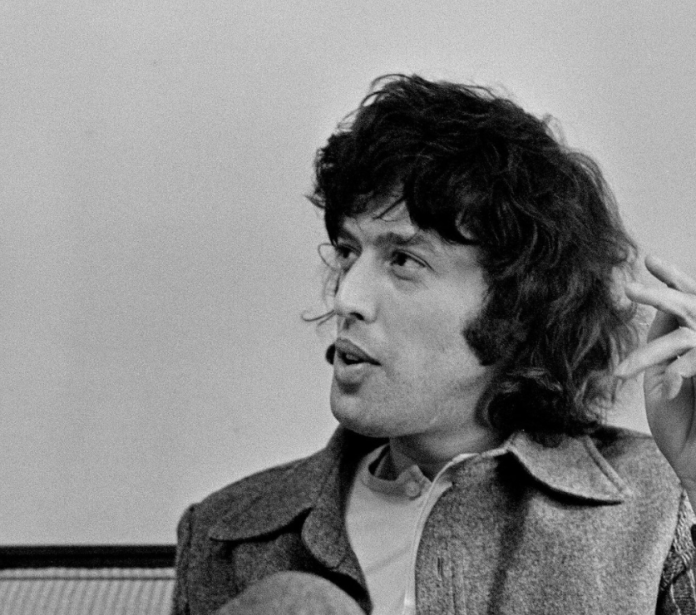
In a world numbed by relentless headlines, the death of Sir Tom Stoppard at 88 jolts the theatre world into a moment of reckoning. The Oscar and Golden Globe winning screenwriter and playwright who could fuse philosophy with wit died peacefully at his home in Dorset, surrounded by family. He leaves behind a catalog of plays that bend language into living debates and invite audiences to test ideas as if on a stage of syntax and consequence. Across six decades, Stoppard invited laughter with brains intact, proving you could be deeply intelligent and deeply humane at the same time, a rarity in both stage and screen.
Born Tomas Straussler in Czechoslovakia, his family fled the looming Nazi occupation, a journey that whisked him from wartime Europe to Britain with stops in Singapore, Australia, and India. His father died in a Japanese prison camp, a memory that fed the tenderness and ironies of his later work. Knighted by Queen Elizabeth II in 1997 for services to literature, he also received the Order of Merit in 2000. His rise began with Rosencrantz and Guildenstern are Dead, a sly chess game with Hamlet’s minor players that launched him to the National Theatre and Broadway. Leopoldstadt, staged in 2020, won Olivier Best New Play and four Tony Awards, sealing his status as a master of both theatrical form and historical imagination.
As a screenwriter, he shared the Best Screenplay Oscar for Shakespeare in Love and contributed to Brazil, Indiana Jones and the Last Crusade, and Tolstoy adaptations, while also crafting radio and television work. Critics have noted that his early works were dazzling but sometimes emotionally cool, while later pieces grew warmer and more empathetic. He insisted that he wrote to discover what he really thought, and that the humanity of his characters gives theatre its true art. As he told Joan Bakewell in 2002, „I slowly learned that plays work best if you let them have some blood heat, and not simply be exciting exchanges of witty ideas.” „It’s the humanity of the characters that gives theatre the possibility of being great art.” The Coast of Utopia, Arcadia, Jumpers, Travesties, Hapgood, and Rock’n’Roll each demonstrate how he could fuse mathematics, politics, literature and music into unforgettable stage experiences.
His enduring influence goes beyond the stage directions and clever reversals; it lies in a style that prizes curiosity, breadth of knowledge, and generosity of spirit. The Leopoldstadt success epitomized his ability to fuse history with intimate human drama, and his screen work proved his range extended from witty comedies to sweeping adventure stories, all animated by a hunger for meaning.