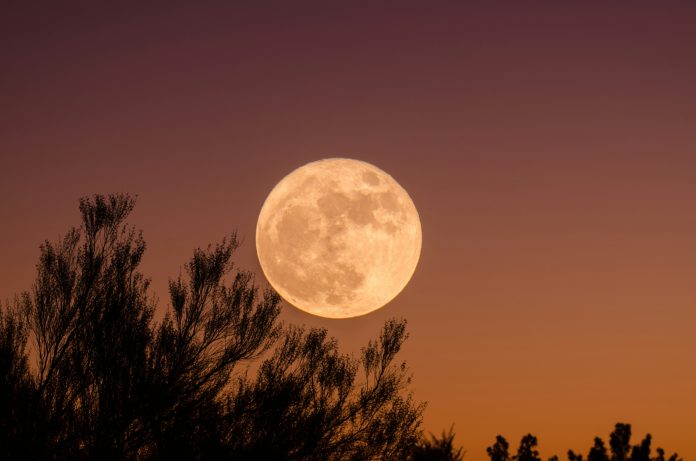
The final December supermoon of 2025 lit up the night sky with a brightness that startled casual stargazers and seasoned astronomers alike. Reaching its closest point to Earth, the Moon appeared larger and more radiant than usual, turning familiar horizons into silver silhouettes and prompting awe from observers in places as varied as Sarıkamış in Kars to urban terraces around the world. This last of three supermoons in 2025 delivered a striking nocturnal spectacle that many described as a once‑in‑a‑year alignment between orbital dynamics and human curiosity.
Supermoons occur when the Moon is near perigee, the closest point in its elliptical orbit around Earth. In December 2025, the alignment produced a disk that looked unusually large and bright, a feature that can wash out stars and cast long shadows on the landscape. The event was the year’s final lunar close approach, offering a dramatic reminder of the Moon’s rhythmic pull on tides, nocturnal animals, and our own habit of looking upward.
Across continents, observers captured the moment with phones and cameras, turning city lights into a backdrop for a near‑celestial painting. In Sarıkamış, villagers reported the sky bright enough to illuminate rooftops; elsewhere, long exposures revealed the Moon’s halo and subtle color fringes. While the science remained straightforward, the social impact was widespread: a shared moment of wonder that intersected with a year loaded with big energy moves, space research, and global news.
Beyond the Moon, the same feed carried stories ranging from Uzbekistan’s €9.46 billion green-energy push to strengthen power networks to debates about space and technology’s role in national growth. The juxtaposition of a celestial spectacle with human‑scale projects—renewables, energy resilience, and space research—underlined how science and policy are converging to shape the final months of 2025.
Looking ahead, astronomers say the December event will be a reminder to keep tracking the Moon’s orbit, as future cycles will bring new opportunities for observation, photography, and citizen science. For casual viewers, the best practices are simple: seek dark skies, time exposures after astronomical twilight, and share your observations with local astronomy groups or online communities.