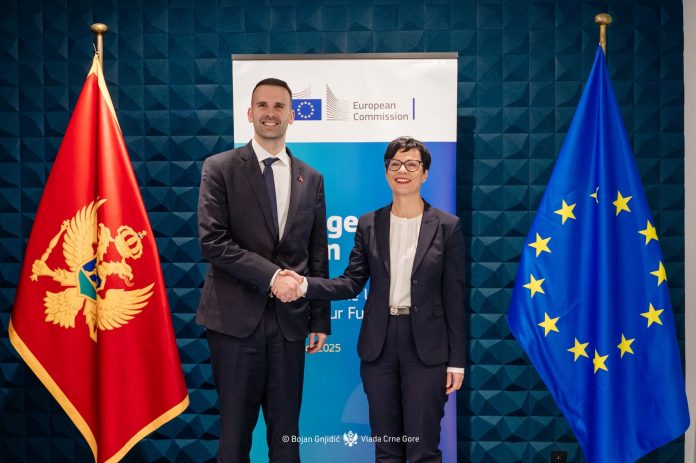
A dramatic claim from a tiny Balkan nation could redraw Europe’s map: Montenegro says it aims to close all EU accession chapters by the end of 2026 and join the bloc during the European Commission’s current term, which runs through 2029. In an exclusive Euronews interview from Brussels, Prime Minister Milojko Spajić framed the move as not only possible but essential, arguing that Montenegro would add value to the Union rather than detract from it.
Montenegro’s push comes amid strong EU praise for reforms, especially those tied to the Growth Plan for the Western Balkans, which aims to accelerate regional economic development through deeper integration and fundamental reforms. Yet the road remains conditional: completion of key reforms—chiefly on the rule of law and appointments to the constitutional court—will determine when, or even if, an accession treaty can be finalized. Spajić underscored that there is no alternative to full EU membership, insisting, “Nobody is even thinking of alternatives. The full membership of the European Union is what we are gunning for.”
Several concrete steps mark Montenegro’s integration trajectory. The country is officially the smallest among the nine EU candidate states, with just over 620,000 people, and it is currently the most advanced in implementing the reforms needed for Brussels to consider readiness for membership. Notably, Montenegro joined the Single Euro Payments Area (SEPA) in October and has long used the euro as its de facto currency since 2002. In a signal of deeper market integration, free mobile roaming between Montenegro and the EU is set to begin in 2026, enhancing cross-border connectivity as part of a broader push toward a European single market.
What Montenegro is aiming for
Spajić argues that joining the EU would be a natural continuation of Montenegro’s Euro-area integration and its alignment with EU institutions. He emphasized that the country’s path is tied to adherence to reform timelines and the readiness of the accession treaty, suggesting the timeline is contingent on the pace and quality of reform, not merely political will. He also highlighted that the ambition is tied to the current Commission’s term and the EU’s broader Western Balkans strategy, including the Growth Plan intended to accelerate regional development through deeper integration with European rules and standards.
What it means for Europe
The proposed timetable, if realized, would accelerate Western Balkan integration and potentially reshape EU policy priorities ahead of the 2029 Commission term. The emphasis on rule-of-law reforms and constitutional court appointments signals that Brussels remains cautious about legal and institutional readiness, even as it recognizes Montenegro’s reform momentum. Beyond membership, Montenegro’s SEPA inclusion and euro-area alignment deepen financial and consumer-market integration, while roaming liberalization in 2026 anchors practical benefits for citizens and businesses alike. The European Union’s Growth Plan for the Western Balkans provides the policy backdrop, framing enlargement as a pathway to stability and growth across a strategically important region.