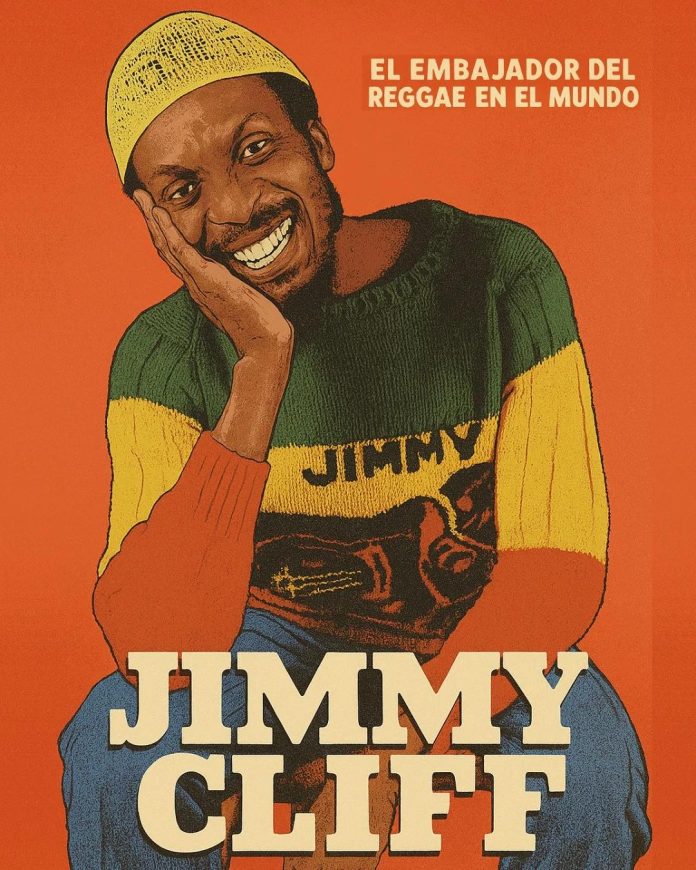
A wave of grief swept across the music world today as reggae legend Jimmy Cliff died at 81, following a seizure that was followed by pneumonia, according to a post on his official Facebook page. Cliff’s wife Latifa Chambers wrote: “I am thankful for his family, friends, fellow artists and coworkers who have shared his journey with him.” “To all his fans around the world, please know that your support was his strength throughout his whole career. He really appreciated each and every fan for their love.” The message was signed by their children, Lilty and Aken. Cliff, born James Chambers on 30 July 1944, was a singer, multi-instrumentalist and actor whose influence helped popularize reggae far beyond Jamaica. He leaves a legacy that extends from humble beginnings to global stages and iconic soundtracks. Cliff’s passing prompts a reflection on a life that shaped music and cinema alike.
From poverty in St. James to Kingston’s crowded clubs, Cliff’s ascent was underpinned by a voice that could carry both longing and defiance. The eighth of nine children, he moved to Kingston as a teenager, adopted the surname Cliff, and began recording singles that would eventually break Jamaican charts. His early breakthrough came with Hurricane Hattie, setting the stage for a global breakout that would redefine reggae’s reach. The journey culminated in the 1969 single Wonderful World, Beautiful People and the politically charged Vietnam, which Bob Dylan later called “the best protest song ever written.” Cliff described the essence of his music as a blend of struggle and hope, a sentiment that resonated with generations of listeners.
In 1965 Cliff relocated to London to work with Island Records, a move that accelerated his international exposure. His collaborations and solo work helped bring Jamaican music into the mainstream, culminating in collaborations with major acts and a lasting impact on pop culture. The Harder They Come, his breakout film role, is considered a cornerstone of Jamaican cinema and a crucial entry point for reggae on the world stage. Cliff contributed songs to the soundtrack, including the gospel-tinged Many Rivers To Cross, which he later reflected on as emblematic of his early career’s struggle and the hope that followed.
The Harder They Come is often described as possibly the most influential Jamaican film and a pivotal moment for Caribbean cinema. Cliff’s performance as Ivan Martin and his soundtrack work helped open the American market to reggae, a breakthrough later reinforced by his 1993 cover of I Can See Clearly Now on the Cool Runnings soundtrack. Throughout the 1980s he also collaborated with the Rolling Stones on the Dirty Work album, illustrating his adaptability and enduring relevance. The soundtrack contributions, along with his film work, solidified Cliff’s status as a true global ambassador for reggae.
Cliff’s artistry earned him multiple honors: Grammy-winning albums Cliff Hanger (1985) and Rebirth (2012), induction into the Rock and Roll Hall of Fame in 2010, and Jamaica’s Order of Merit. His life and work were celebrated by figures across music and politics; Jamaica’s Prime Minister Andrew Holness called him “a true cultural giant whose music carried the heart of our nation to the world.” Even as fans mourn, the wider cultural impact remains evident in how his songs have inspired teachers, activists, and artists worldwide. Today’s tributes reflect a universal recognition of a man whose music was both a soundtrack to struggle and a beacon of hope. The family’s message and Holness’s tribute frame a life lived at the heart of Jamaican culture and its global resonance.