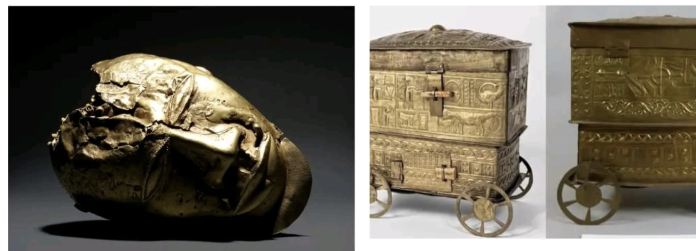
A high-stakes homecoming is unfolding as 130 artefacts are returned to the Asante kingdom in Kumasi, reigniting a global reckoning over colonial-era looting and the politics of cultural ownership.
The majority of the pieces—royal regalia, drums and ceremonial gold weights dating back to the 1870s—will re-enter the living memory of the Asante people, shedding light on how gold shaped social and ceremonial life in one of Africa’s oldest kingdoms. Twenty-five artefacts were donated by Hermione Waterfield, a pioneering Christie’s curator with a long history of supporting West African art restitution, while the remainder were provided by AngloGold Ashanti as part of a gesture described by officials as cultural respect and reconciliation.
At a ceremony at the Manhyia Palace, Asantehene Otumfuo Osei Tutu II expressed gratitude for the voluntary return, noting it reflected „goodwill and respect for the source and legacy of the Asante kingdom”. The event sits within a broader pattern of restitution that has gained momentum in recent years, including partnerships where looted pieces are loaned to museums for public viewing.
The narrative is not without friction. In the central Ashanti region, residents have raised concerns about AngloGold Ashanti’s operations, arguing that resource extraction has not translated into local development or job creation. The gesture, however, adds to a layered history in which colonial-era looting—an event that saw Kumasi’s royal palace plundered during the Anglo-Asante wars and the 1900 siege—now contrasts with modern acts of restitution and dialogue.
Historically, restitution has traveled beyond Ghana. Last year, 32 looted artefacts were displayed at the Manhyia Palace Museum under a three-year loan from the Victoria & Albert Museum and the British Museum, underscoring a transcontinental conversation about rightful ownership. Globally, the movement has gained traction—Germany’s 2022 return of the Benin bronzes to Nigeria marked a significant milestone in addressing colonial legacies. The current return to Kumasi, while symbolic, also signals a demand for accountability and sustainable investment in heritage sectors and communities.
Looking forward, cultural leaders emphasize that restitution must be accompanied by ongoing collaboration, transparent governance, and tangible benefits for source communities. The Asante case adds a crucial voice to the debate: heritage is not merely a collection of objects, but a living lineage that institutions around the world must respect, protect, and share in perpetuity.