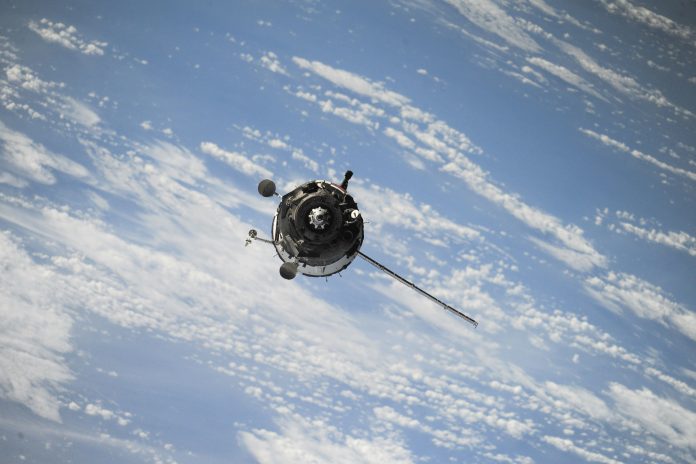
Europe stands on the brink of a renewed, high-stakes arms race in orbit. 58% of Europe’s space assets face new threats as an orbit-wide contest intensifies, with GPS jamming, kinetic missile developments, and a growing reliance on foreign launch systems endangering access to critical services. In response, European governments are unveiling multi-billion-euro plans to shield satellites, secure communications, and ensure resilient access to space.
Germany unveiled its first national space strategy focused on security, earmarking €35 billion for spaceflight projects, satellite networks, and international collaborations to make the nation “more capable of action in space.” Defence minister Boris Pistorius warned that space systems have become integral to daily life, and disruptions would have serious consequences for security and everyday routines. France followed with a plan marrying scientific research and security, aiming to maintain competitive access, build a space economy, and strengthen a space military architecture. The package totals over €10 billion by 2030, with major investments in the Guiana Space Centre to operationalize Ariane 6, and potential Orbit Guard and Toutatis systems to protect assets in orbit. Macron’s blueprint also advances research in Earth sciences to aid climate resilience and fosters Space Pact to bridge military and industry conversations.
Italy is carving out a multi-domain space defense, with a October budget of €109 million for early defense capabilities and €131 million for space surveillance to monitor debris and protect critical assets. An additional €186 million backs the Sicral 3 secure-communications satellite, while Thales Alenia Space is set to build a network of Italian satellite factories, aiming for full operation by 2026. Italy’s Iride Earth-observation constellation began its first launch in January 2025, and Rome collaborates with Germany and France on European launchers like Ariane 6 and Vega-C.
The United Kingdom’s Space Agency outline prioritizes economic and security gains through small-launch capabilities, eco-friendly spaceports, and in-orbit repair or upgrade capacity, alongside a push for inclusive, high-skilled talent and robust international partnerships.
Sweden formalized a defence-and-security space strategy in 2024, allocating SEK 1 billion to reconnaissance and surveillance, and advancing the Esrange spaceport in the north for polar satellites. The Nordic nation emphasizes strategic advantages from its location and looks to partner with Firefly Aerospace to launch satellites from Esrange next year.
The Netherlands anchors its end-of-decade defence space goals in a plan that by 2027 will deliver a satellite network for reliable intelligence, and by 2030 will employ AI to track space objects, observe Earth, and coordinate satellite communications. It also seeks access to a European early-warning system for air and missile defence, extending the Netherlands’ Defence Space Agenda from 2022.
Across these plans, Europe is constructing a cross-border space defense architecture: secure ground segments, orbital assets, and resilient launch capabilities to compensate for dependency on foreign providers. The emphasis includes space situational awareness, secure communications, early warning, and climate-focused Earth observation, all while expanding military and civilian collaboration to sustain scientific leadership and economic growth. The overarching goal remains to protect critical infrastructure and maintain strategic autonomy, a shift underscored by statements from leaders like Pistorius and Macron, who frame space as essential to national security and European resilience.